

What could ‘Manchesterism’ mean for global investment into Britain

Andy Burnham has announced ambitious plans to “rewire Britain.” But beneath the politics, it raises a more commercial question as to whether his model of “Manchesterism” could reshape how the UK attracts overseas investment.
30.06.2026
At its simplest, Manchesterism is Burnham’s attempt to scale up the Greater Manchester model nationally. It is a blend of devolution, public-private partnership, infrastructure investment, transport reform, housing delivery and targeted regeneration.
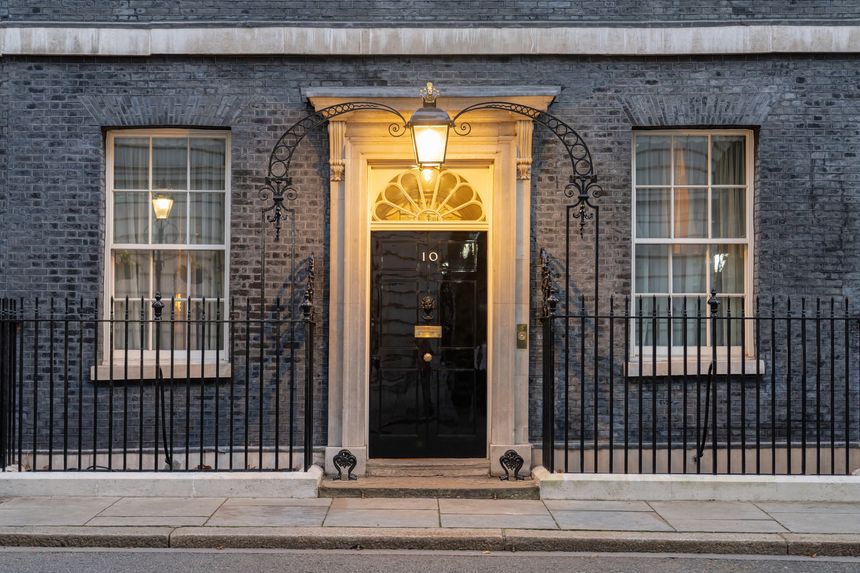
In his speech in Manchester, Burnham argued that growth “cannot be ordered from the top down” and pledged a new “No 10 North” to act as the “nerve centre of a rewired Britain”.
For international investors, that matters. The UK has long sold itself on stability, the rule of law, language, time zone, deep capital markets and access to talent. But in recent years, the competition for mobile global capital has become sharper. The Harrington Review of foreign direct investment warned that the UK needs to become more proactive, dynamic and competitive if it is to secure major projects in sectors such as green industries, advanced manufacturing, life sciences, digital technologies and creative industries.
This is where Manchesterism could give the UK a stronger story. Instead of presenting Britain as a single London-led investment destination, it allows the country to market itself as a network of serious regional economies, each with its own strengths, talent pools and growth sectors. That is particularly important at a time when the latest Department for Business and Trade figures show 1,555 inward investment projects landed in the UK in 2023/24, creating 71,478 new jobs and safeguarding 11,613 more.
The strongest argument for Burnham’s approach is certainty of place. Investors do not just choose countries. They choose cities, sites, labour markets, transport links, planning systems, universities, supply chains and political relationships. A more devolved UK could make those propositions clearer. If mayors and regional leaders have more power over housing, transport, skills and regeneration, they can create more coherent offers to overseas investors.
That could be especially powerful for the North, Midlands and other regions outside London and the South East. Burnham’s “No 10 North” proposal is symbolically important because it signals that regional growth would no longer be treated as a secondary policy area. In his speech, he said the Manchester-based operation would coordinate national and local government around long-term economic strategy and help places set new growth ambitions.
Done well, that could strengthen the UK’s investment pitch. Overseas investors often want speed, clarity and confidence. They want to know who makes decisions, where infrastructure is going, what incentives are available, how planning and skills systems work, and whether local political backing exists. A devolved model could remove some of the friction that has historically made the UK appear too centralised and too slow.
There is also a sector angle. Burnham’s focus on transport, housing, utilities, reindustrialisation and regeneration speaks directly to areas where global capital is already active. Infrastructure funds, sovereign wealth funds, pension funds and strategic investors are looking for investable projects with long-term demand. If Manchesterism produces clearer pipelines of housing, transport, energy, advanced manufacturing and urban regeneration opportunities, it could help translate political ambition into bankable projects.
Risks
But there are risks too. Some investors may be unsettled by Burnham’s language around greater public control of utilities and the use of social value weighting in public procurement. His speech included plans for ten-year programmes to bring down the cost of essentials such as water, housing, energy and transport, while also favouring British firms in some public contract processes.
That does not necessarily make the UK less attractive. Many global investors are comfortable with active government, provided rules are clear and returns are predictable. The risk comes if intervention is seen as ad hoc, politically driven or hostile to private capital. For Manchesterism to support inward investment, it will need to be framed not as state control versus business, but as a partnership model that gives investors confidence while delivering social and regional outcomes.
There is also a delivery challenge. Greater Manchester has a strong story to tell on transport reform, regeneration and civic leadership. But scaling that model across the UK is much harder. Different regions have different institutional capacity, political leadership, planning pressures and commercial strengths. A national Manchesterism strategy would need to avoid becoming fragmented, with every region offering a different process and investors struggling to navigate the system.
That is where law and professional advice become central. If the UK wants to attract more overseas investment into its regions, investors will need support on planning, real estate, employment, tax, regulatory risk, procurement, corporate structuring, dispute resolution and public-private partnerships. The legal framework is not a side issue. It is part of the investment proposition.
The best version of Manchesterism would therefore be pro-growth, pro-region and pro-certainty. It would give places more power, but also make investment easier to deliver. It would use public leadership to unlock private capital, not crowd it out. And it would give international investors a more compelling reason to look beyond London. In that sense, Burnham’s speech may prove significant not because it introduced a new slogan, but because it pointed towards a different investment story for the UK.
The old pitch was that Britain was open for business. The new one may need to be sharper: Britain’s regions are open for growth, and the legal, political and commercial framework is there to help global capital land with confidence.
If Manchesterism can turn devolution into delivery, it could become a powerful tool for attracting overseas investment. If it remains a political concept without practical detail, investors may welcome the ambition but wait for proof.
Key Contacts
Related Articles
 Expert CommentManchesterism needs a national investment champion if it is to deliver for UK plcThe phrase “it’s the economy, stupid” became famous during Bill Clinton’s successful 1992 presidential campaign because it captured something every government eventually confronts. Growth is not an abstract political ambition – it’s the measure by which plans, policies and political machinery are ultimately judged.
 Expert CommentWhy the UK’s inward investment story is stronger than the headlines suggests
 Expert CommentAutumn Budget: Stability Will Be the BenchmarkAs I reflect on the Government’s latest Budget, one thing is clear: It will be judged by its impact on stability. For investors and businesses alike, stability is not just a desirable outcome, it is the foundation upon which growth is built.


