

Sharia Series: Faithfully Married. Legally Protected?

A recent BBC article, ‘Divorced after five days’ (linked below) raises an important question, how well do we understand the legal and religious implications of the marriage we are entering into? As a specialist family lawyer, this is a topic I talk about regularly as I deal with the ramifications day to day of parties entering into agreements without being clear on their rights. The article refers to the Islamic marriage certificate containing missing and incorrect details.
10.11.2026
These contracts (the aqid/nikkah nama) are as important as any others and specialist advice should be sought on the terms. This wider message is one I regularly highlight in my work, whether you are planning an Islamic marriage, a civil marriage or both, take advice before the ceremony, rather than waiting until something goes wrong.
Marriage is a significant personal commitment, but it also brings rights, responsibilities and potentially substantial financial obligations. Understanding those consequences does not take away from the importance of the occasion. It allows both parties to enter into it with clarity. For couples entering into an Islamic marriage, that means understanding their position under Sharia as well as the law of England and Wales. The two should not be assumed to be interchangeable.
Does an Islamic marriage create a legally recognised marriage?
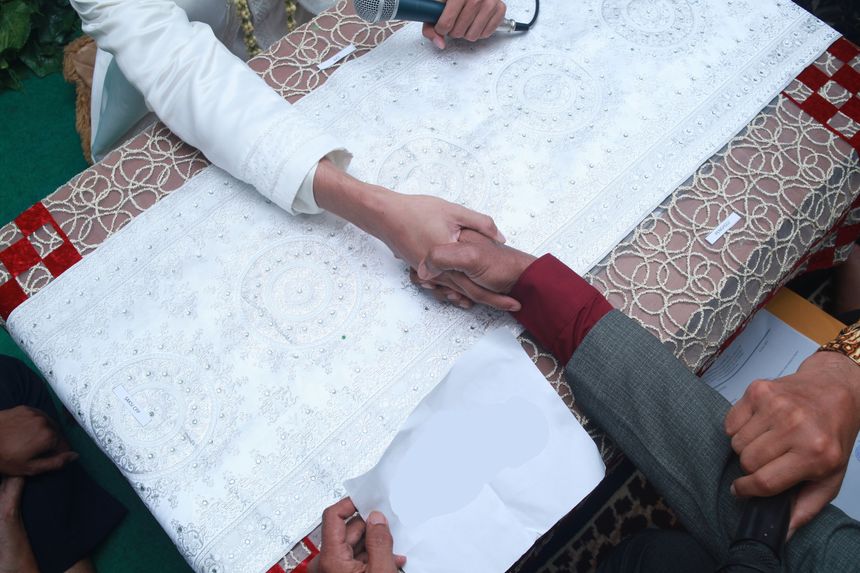
A Nikkah conducted in England and Wales does not automatically create a marriage recognised under civil law. It must also comply with the applicable legal formalities. A religious ceremony can satisfy those requirements where properly arranged, otherwise a separate legally compliant ceremony will be needed. An intention to have a civil ceremony later does not, by itself, give the parties the legal status of spouses.
As I have explored previously in this series, the distinction really matters and can make a significant difference to the protections afforded to the parties. A religious-only ceremony may be a ‘non-qualifying ceremony’, rather than a valid or void marriage. Where that is the position, the parties cannot access the financial remedies available on divorce or nullity simply because they consider themselves married. Living together for many years or having children does not create a ‘common law marriage’ in England and Wales.
The position can differ where the marriage takes place abroad. An Islamic marriage which is legally valid in the country where it was celebrated may be recognised here, subject to the applicable recognition rules, including capacity to marry. It should not be assumed that every overseas Nikkah is unrecognised, or that every religious marriage is legally valid. Equally, a religious divorce does not, on its own, necessarily end a marriage recognised under civil law. Specialist legal advice should be obtained.
Islamic marriage only: what happens to the family home?
Where there is no legally recognised marriage, property disputes may be addressed under the Trusts of Land and Appointment of Trustees Act 1996. This provides a route for the court to determine the nature and extent of a person’s beneficial interest in a property and, where appropriate, make an order for sale. It is not a substitute for the court’s financial powers on divorce.
The focus is on ownership and the evidence supporting it, rather than simply redistributing assets to achieve a fair outcome between former partners. Relevant evidence may include a declaration of trust, the parties’ intentions, financial contributions and their arrangements concerning the property. Paying household bills, caring for children or living in a home does not automatically establish a share in it. Nor does being absent from the legal title necessarily mean that no claim is possible.
My advice is to have these discussions before buying a property, contributing to a deposit or moving into a home owned by the other party or their family. Understand your marital status and the validity of your marriage before purchasing a significant asset such as a home, or moving someone into your property. A properly drafted declaration of trust and cohabitation agreement can help record ownership and financial arrangements. A Nikkah certificate should not be assumed to perform that function, and neither document turns an unrecognised religious marriage into a civil marriage.
Mehr: understand the promise before making it
Turning to Mehr, this is an obligation owed by the husband to the wife under an Islamic marriage. It may be payable immediately, deferred, or split between the two. It is not simply a ceremonial figure to be written into the Nikkah agreement without discussion. Both parties should understand what has been promised, when payment becomes due and the implications if the marriage ends.
Clarity is particularly important where mehr consists of gold, property, a payment in another currency or an obligation deferred until a specified event. The agreement should identify the asset or amount, the payment terms and any relevant conditions. It should also distinguish mehr from other wedding gifts and family contributions. The consequences of different religious divorce routes can vary, so neither party should assume that mehr must always be returned, or can never be affected, on separation.
Religious entitlement and civil enforceability are separate questions. Depending on its terms and the surrounding circumstances, a mehr agreement may be capable of enforcement through a contractual claim, even where there is no legally recognised marriage. That is not automatic. Where there is a recognised marriage, the court’s approach to financial provision must also be considered. Mehr should not be treated as a guaranteed replacement for property rights, maintenance or pension provision. Advice should be sought on the mehr, especially if it is significant, as the position under Sharia may be protected by way of a cohabitation or nuptial agreement.
What if there are children?
The absence of a legally recognised marriage does not remove a parent’s financial responsibilities towards their child. This is again a key area advice that can be provided ahead of entering into an Islamic marriage and starting a family. Depending on the circumstances, an application under Schedule 1 to the Children Act 1989 may be available for financial provision for a child. Orders can include lump sums, a transfer or settlement of property and, within the court’s jurisdiction, periodical payments. For many families, ordinary child maintenance is dealt with through the Child Maintenance Service (CMS), with court-ordered maintenance available in particular circumstances. Periodical payments under Schedule 1 can include provision for expenses attributable to a child’s disability and for education or training, including school fees. Where the paying parent’s gross income exceeds £156,000 per year (£3,000 per week), a ‘top-up’ maintenance order may also be sought, provided the CMS has first made a maximum maintenance calculation.
Schedule 1 may also assist where one parent is based outside the UK and the CMS consequently has no jurisdiction, provided the court has jurisdiction to hear the application. CMS jurisdiction generally requires both parents and the child to be habitually resident in the UK, although exceptions apply, including where a paying parent abroad works for certain British organisations. A parent living abroad should therefore not be assumed automatically to fall outside the CMS scheme. Specialist advice is important on the appropriate route and the enforcement of any order overseas.
It is important to note that a Schedule 1 claim is for the child’s benefit, it is not a financial settlement for an unmarried partner equivalent to a divorce award. The court considers matters including the parents’ resources and responsibilities and the child’s needs. Housing may be provided for a limited period, with the property or funds reverting to the providing parent when the arrangement ends, often after the child finishes the relevant stage of education. It should not be assumed that the parent caring for the child will receive a permanent share of the home.
Advice matters before a civil marriage too
This is not a conversation only for couples planning a religious-only marriage. A civil marriage creates a different legal framework, and both parties should understand its implications for their home, savings, pensions and wider financial responsibilities. A prenuptial agreement may be appropriate, particularly where there are existing assets, family wealth, business interests or children from a previous relationship. These agreements are not automatically binding in England and Wales, but can carry significant weight where the relevant safeguards are met and it would be fair to uphold them.
Where a couple wants their arrangements to reflect Sharia principles, those wishes can be considered alongside the requirements of civil law. A Nikkah agreement should not, however, be assumed to have the same effect as a properly prepared prenuptial agreement. If there are connections to another country, advice may be needed in more than one jurisdiction.
A Nikkah agreement should be understood, not simply signed
I advise on Sharia family law and draft the Nikkah agreement itself, as well as advise on its implications alongside the law of England and Wales. That includes discussing mehr, proposed conditions, financial arrangements and the religious rights and responsibilities which the agreement is intended to reflect. Interpretation can differ between schools of thought and jurisdictions, so advice must be tailored rather than based on assumptions about a single standard contract.
Whether you are the prospective husband or wife, you should know your rights under Sharia before entering into the agreement, understand the obligations you are accepting and appreciate which terms may be enforceable under civil law. Each party should have the opportunity to obtain their own independent advice, with sufficient time to ask questions and consider the wording. Advising one party does not mean acting for both.
For me, taking advice before marriage is about making an informed choice, not anticipating that a relationship will fail. Faith, culture and legal protection do not need to be treated as competing considerations. With the right advice, couples can understand how they fit together and begin married life knowing what they have agreed, what their rights are and what steps are needed to protect them.
BBC article: Divorced after five days - the story of a 'sham marriage' - BBC News
This article provides general information. It is not a substitute for advice on individual circumstances.
Key Contacts
Related Articles
 Expert CommentCultural Competence in Practice: Working Effectively with Muslim ClientsAccording to the 2021 Census conducted by the Office of National Statistics (ONS) there were approximately 3.9 million Muslims in England and Wales. This represents 6.5% of the total population (up from 4.9%, 2.7 million, re 2011 Census). These figures have increased since.
 Expert CommentSharia Series: Arranged, Forced, and Love MarriagesMarriage is a significant institution in Islam, emphasizing companionship, mutual respect, and familial ties. Many Muslims are aware of a well-known Hadith which refers to marriage for a Muslim fulfilling half of their religion.
 Expert CommentSharia Series: Married at Four Sights. The recognition of Polygamy in Sharia and English LawPolygamy is the practice of having more than one spouse simultaneously, and it’s often a topic that generates much debate. The topic of polygamy often arises with conversations surrounding Islam and Mormonism, however in many other religions and cultures polygamy is (or was historically) permissible.


